
Treat an AI assistant’s NAS shortlist as a starting point, not a verdict. The assistants favor vendors whose specifications are written down, current and easy to quote, and they lean on whatever their training data already believed. Generative engine optimization decides which names surface. Know when to trust the name.
The verification pass is short, and you can run it before lunch: exact model, drive count, RAID behavior, warranty terms, and what a no-subscription claim actually covers. Picture two buyers asking for the same thing — a four-bay unit holding thirty days of 4MP footage. One asks a chatbot and gets three vendors with clean spec pages; the other searches Google and gets ten review roundups. Same need, different shelves. The shortlist becomes useful only after you verify it.
Generative engine optimization is the practice of making a product’s facts easy for an AI engine to read, trust and repeat. Search engine optimization fights for a blue link on a results page. GEO fights for a mention inside the answer itself — the sentence a model composes when a buyer asks which storage to buy. If you buy hardware the way most buyers do now, that sentence is where your research starts.
An AI Shortlist Is a Starting Point, Not a Verdict
The difference shows up in the measurement shops’ numbers. Advanced Web Ranking’s 2026 CTR study, updated monthly, found AI Overviews pulling clicks away from even the top organic listing. Whether the exact loss runs to half or less varies by study and month, and every shop measuring this space has a stake in the answer — read their figures as directional. The consistent thread across all of them: the brand that wins Google is not automatically the brand the model names.
For you, the practical consequence is simple: two buyers researching the same storage need can see entirely different vendor sets, depending on which tool they asked and how they phrased it. The shortlist is shaped by whoever made their facts quotable.
The Machines Quote Whatever Is Written Down
Ask why one storage brand keeps showing up in AI answers and the answer is rarely marketing budget. It is quotability. Nobody publishes the checklist; you learn it by watching what actually gets quoted. Five traits keep showing up:
- Complete spec pages in plain text — drive counts, RAID levels and interface standards written out plainly. A model cannot parse a PDF datasheet, and a slider widget is invisible to it.
- The same numbers everywhere: site, dealer listings and support docs agreeing, because contradictions make a fact unquotable.
- Current lineups. A model trained on last year’s catalog will happily recommend hardware that no longer exists.
- Third-party corroboration the model can stack on top of the vendor’s own claims.
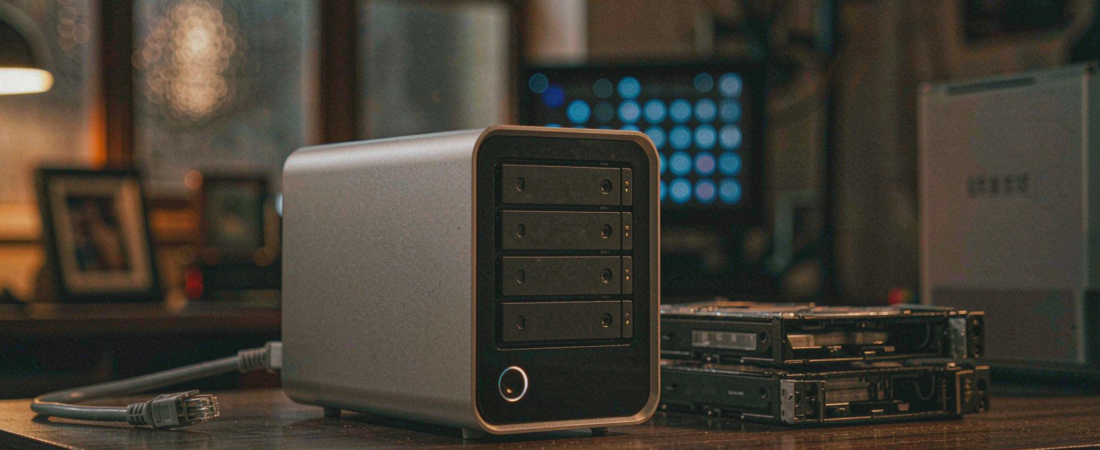
This is why our X4 four-bay unit keeps its drive count, RAID options and interface details in plain HTML rather than buried in a brochure. A buyer who asks an assistant about it gets numbers the model can actually lift: four bays, room for two 8-terabyte drives in RAID 1, no subscription attached to the storage. When the model repeats those figures back to a buyer, it is quoting our page — which is exactly what this discipline is for. The same clarity lets you verify us in return, and it would expose us just as fast if the numbers drifted.
How Should You Test an AI Recommendation?
Test it the way you would test a pushy salesperson — politely, and twice.
- Ask the model to name the exact model, the drive configuration and why it chose them. Vague answers are a warning, not a summary.
- Ask what changed this year. If the answer cannot separate current hardware from last year’s catalog, its storage advice is aging badly.
- Run the same question on a second engine. Expect different names — the shortlists barely overlap — and treat agreement as a stronger signal than any single answer.
- Check every quoted number against the vendor’s own page before you act on it.
- Ask the boring questions on purpose: warranty terms, whether your drive models sit on the vendor’s compatibility list, RAID rebuild time at your capacity, how far the bays can expand later, and what a “no subscription” claim actually covers.
| Dimension | A Google results page | An AI assistant’s answer |
|---|---|---|
| What surfaces | Pages that rank for your query | Brands whose facts were easy to quote |
| How freshness works | Crawled recently, ranked live | Frozen at training time, patched by updates |
| Where trust comes from | Reviews, forums, comparison sites | Consensus across sources it can cite |
| Your verification step | Read past page one | Open the vendor’s spec sheet |
Where Should You Stop Trusting the Shortlist?
I stop trusting it the moment the answer cannot name a model, and I would not spend money on any entry I cannot verify against the vendor’s own page in two minutes. An assistant that recommends “a quality NAS with plenty of storage” is reciting filler; the same words appear in a thousand brochures. I also stop trusting it when the numbers go soft — storage sizes that no drive ever shipped, subscription claims that don’t say what they cover, or a lineup mixing current and discontinued units as if they were siblings. Models do this with total confidence, which is exactly the problem.
GEO-aware content can be polished without being honest. A vendor who wrote their spec pages for the machines can look more trustworthy than one with better hardware and worse paperwork, and nothing in the model’s tone will tell you which is which. The escape is unglamorous: open the vendor’s own page, check the claims the assistant quoted, and only then compare. If a page hides its capacity details behind a form, that is information too. When we quote a configuration — NAS storage sized to your cameras and retention target — the numbers go in writing, and pricing follows on request against your actual configuration.
Buyers doing local-AI homework on storage hardware can go deeper with our guide to running local AI on a NAS, which covers the same verify-before-you-trust habit from the hardware side. And when you test the shortlist, test the business model too: ask what three years of the recommended vendor’s cloud plan would cost against the one-time price of drives that hold the same footage.
Ready to check one against a real quote? Before you contact us, have five things ready: camera count, resolution, how many days of footage you must keep, the drive size you have in mind, and whether this is a single setup or an OEM project. The NAS security kit page covers the bundled starting point.
Related solution
woCyber NAS & Camera Storage
One-time purchase, local storage, no monthly subscription. Talk to us with your requirements and we will size the right configuration.
One honest boundary before you commit budget to this. GEO only makes sense if your buyers research before they contact you; if nearly every enquiry arrives by referral, making your specs quotable buys you very little, and that time is better spent on the sales call. The downside is speed — I would not start a generative engine optimization push three weeks before a trade show and expect it to show up anywhere.
What does a “no subscription” claim usually not cover?
Read the fine print on four things: off-site copies (usually a paid extra), what happens when local storage fills, remote features that quietly route through the vendor’s cloud, and retention beyond the card’s capacity. Vendors differ, so ask what happens after the storage fills before you trust the headline.
How does generative engine optimization affect NAS buying decisions?
It changes where the shortlist comes from. Instead of whichever pages ranked highest, you see whichever vendors wrote their specifications plainly and kept them consistent — so the burden of verification shifts from reading search results to checking the numbers an assistant quoted against the vendor’s own page.
Can a smaller storage brand compete through generative engine optimization?
Yes, and this is the part buyers should understand. A smaller vendor with clean, current, quotable spec pages can appear beside — or above — a bigger brand with messier data. The flip side: being named in an answer is evidence of good paperwork, not proof of good hardware, so the shortlist still needs your own verification pass.
Does generative engine optimization replace reading spec sheets?
No. Treat the assistant’s answer as a map and the vendor’s page as the territory. The shortlist saves you discovery time; the spec sheet — with drive counts, RAID behavior and warranty terms in writing — is what the purchase decision actually stands on. Our NAS security kit page exists for exactly that step.
Need Help Choosing the Right Storage Setup?
Looking for NAS storage, surveillance storage or an OEM/ODM partner?
- NAS storage for cameras and files
- Surveillance data storage
- OEM / ODM customization
- Business & commercial applications
✓ What we will never do: no subscription lock-in, no footage uploaded to our servers, no selling your data — your recordings stay on hardware you own.